Biblioteca · Fichas de lectura
The Mesnevī (Book the First), together with some account of the life and acts of the author, of his ancestors and of his descendants, illustrated by a selection of characteristic anecdotes as collected by their historian, Mevlānā Shemsu-’d-Dīn Ahmed, el Eflākī, el ‘Ārifī
Yalal al-Din Rumi (Jelālu-’d-Dīn Rūmī, Mevlānā) · trad. y versión en verso de James W. Redhouse
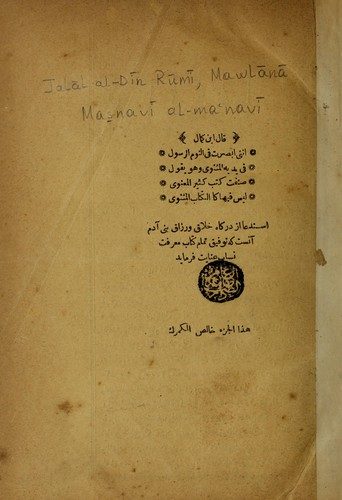
Versión inglesa, en pareados rimados, del libro primero del Mesnevi de Rumi, que entra por el sufismo, la música y la separación de la unidad. Se abre con el lamento de la flauta de caña por la separación de su cañaveral y sigue con diecisiete relatos y comentarios, entre ellos «The Prince and the Handmaid», «The Oilman and the Parrot», «The Harper» y «The Chinese and Roman Artists». James W. Redhouse, el traductor, antepone una serie de anécdotas sobre Rumi, sus antepasados y sus descendientes, recogidas por el historiador Eflaki, discípulo de la tradición mevleví. El texto es de la edición de 1881, no trae páginas, y por eso se cita por sección.
Estructura
Translator’s Preface
Selected Anecdotes, de Eflaki: I a IX
The Mesnevi, Book I: Preface e Introducción, Plaint of the Reed-Flute
Tales I a XVI, de «The Prince and the Handmaid» a «Ali’s Forbearance»
Tale XVII: Conclusion
Notas a pie de página
Citas
«From reed-flute[55] hear what tale it tells; What plaint it makes of absence’ ills:» (Proem. The Reed-Flute; los dos versos van en líneas separadas en el texto)
«Through love, this earthly frame ascends To heaven; a hill, to skip pretends.» (Proem. The Reed-Flute)
«The word of life’s the green, the tender, juicy thorn.» (Conclusion, Tale XVII)
