Biblioteca · Fichas de lectura
The Ethics (Ethica ordine geometrico demonstrata)
Baruch Spinoza (m. 1677); trad. R. H. M. Elwes
1677
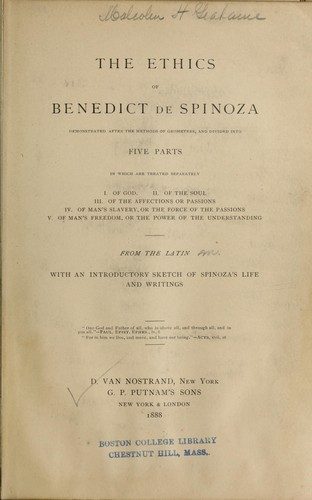
Es la referencia filosófica de un monismo y nuestro interlocutor de la no dualidad entre cuerpo y mente. Spinoza demuestra la Ética en orden geométrico, en cinco partes y en la traducción inglesa de Elwes. Empieza con definiciones y axiomas sobre lo que es causa de sí, sustancia, atributo y modo, y sobre un ser absolutamente infinito. La segunda parte trata de la naturaleza y el origen de la mente; la tercera, de las emociones; la cuarta, de la servidumbre humana o la fuerza de las emociones; la quinta, del poder del entendimiento o libertad humana. Cada parte lleva definiciones, proposiciones, demostraciones y escolios, y las partes I y IV un apéndice. La versión de Gutenberg no lleva año.
Estructura
Parte I. Concerning God
Parte II. On the Nature and Origin of the Mind
Parte III. On the Origin and Nature of the Emotions
Parte IV. Of Human Bondage, or the Strength of the Emotions
Parte V. Of the Power of the Understanding, or of Human Freedom
Citas
«By that which is self–caused, I mean that of which the essence involves existence, or that of which the nature is only conceivable as existent.» (parte I, definición I)
«Blessedness is not the reward of virtue, but virtue itself; neither do we rejoice therein, because we control our lusts, but, contrariwise, because we rejoice therein, we are able to control our lusts.» (parte V, proposición XLII)
«But all things excellent are as difficult as they are rare.» (parte V, escolio final)
