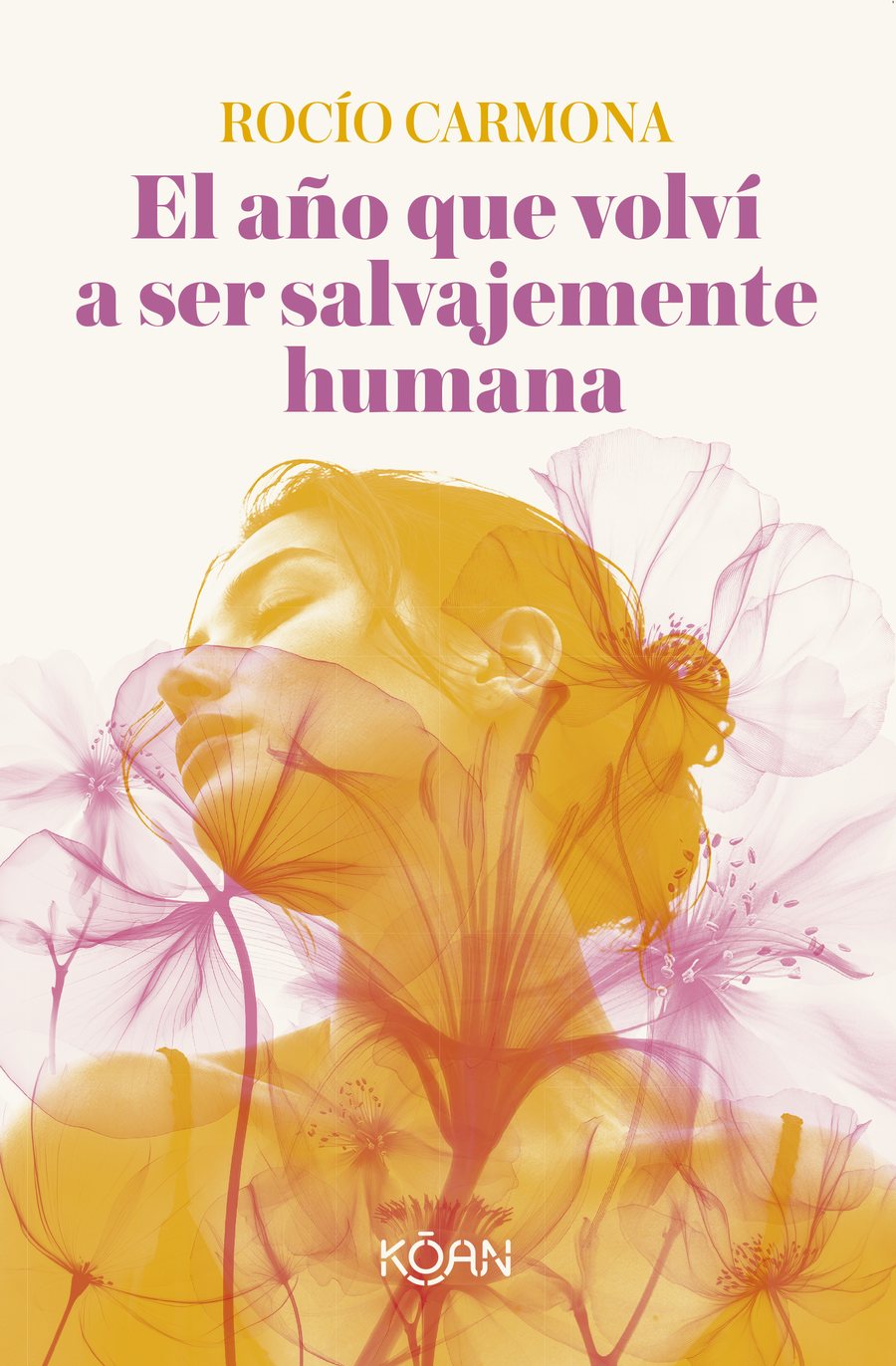
Rocío Carmona’s book
El año que volví a ser salvajemente humana
The year I became wildly human again
Rocío Carmona · Kōan Libros, 2026
Twelve months in Trika’s bioenergetics laboratory, told month by month by the person who lived them.
23 October 2026 · La Central del Raval, Barcelona
The presentation
On 23 October 2026 we presented the book in the garden of La Central del Raval, in Barcelona. The afternoon was opened by its editors at Kōan, Eva Congil and Fernanda Ares, and Fernanda read an excerpt. Then Rocío and Vicen Montserrat talked about the book and the year it tells: the thirst that made her come back, the body that feels, the armour, the tribe, the women of her family, the spiral. At the end, the audience spoke.
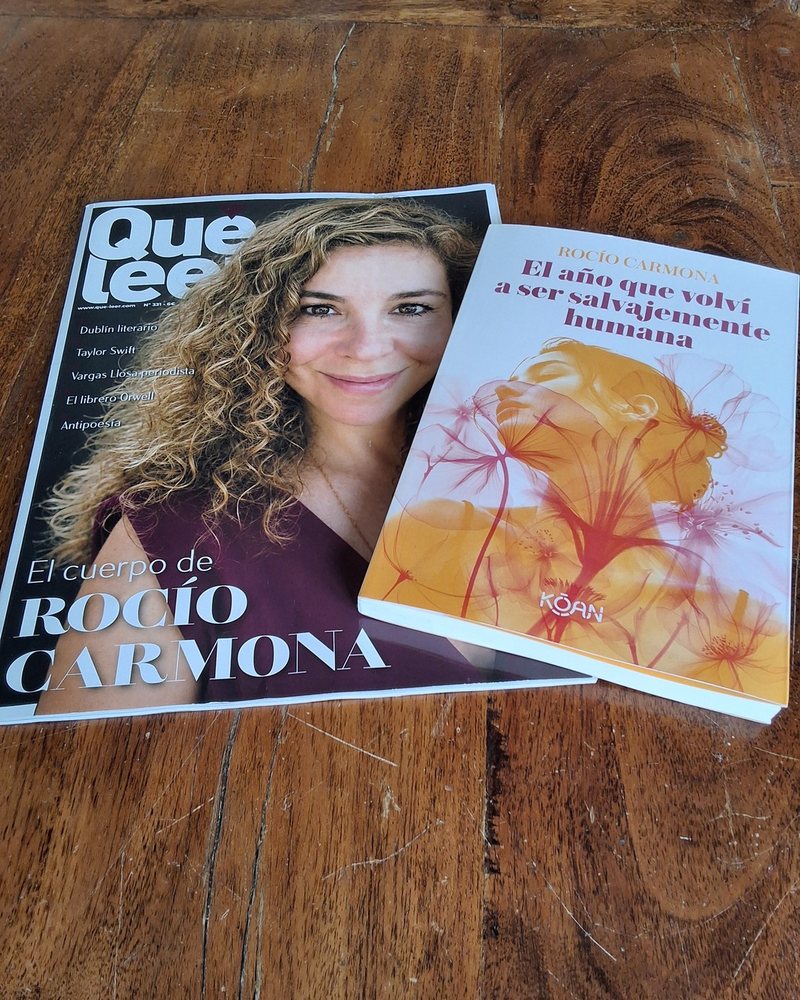
The book
There are silent collapses. After ending a relationship in a painful, confusing way, after moving house and while trying to rebuild her routines, a persistent sense of emotional anaesthesia settles into Rocío’s life: she has lost her taste for life. Everything tastes bland, grey, the same.
Until, at the end of summer, an almost casual invitation to a bioenergetics class in Barcelona opens a door she had long been looking for without knowing it. Something happens there that she still cannot explain: for the first time in a long while she feels life circulating inside her again, as if that glass of cool water had revealed an ancient thirst to her.
This is the diary of the twelve months that followed. From September to August, month by month, Rocío tells how everything that had lain buried for so long begins to surface. The body speaks in the tears that come without warning, in the breath that widens, in the anger that finds its place, in the desire that returns. And also in what is hardest to look at: the ways she had abandoned herself, adapted to others and ignored her own limits.
Without formulas or perfect endings, it is an intimate chronicle of grief, the body and the slow recovery of the capacity to feel. The story of a woman who, having lost her way, begins to discover another way of being alive.
- Author
- Rocío Carmona
- Publisher
- Kōan Libros, 2026
- Format
- 176 pages, paperback
Press, radio and video
What has come out so far
From most recent to oldest.
Onda Cero
“La Rosa de los Vientos”, section “La noche oscura” · 23-minute interview
“It’s really very simple: coming back to ourselves.”Listen to the interview →
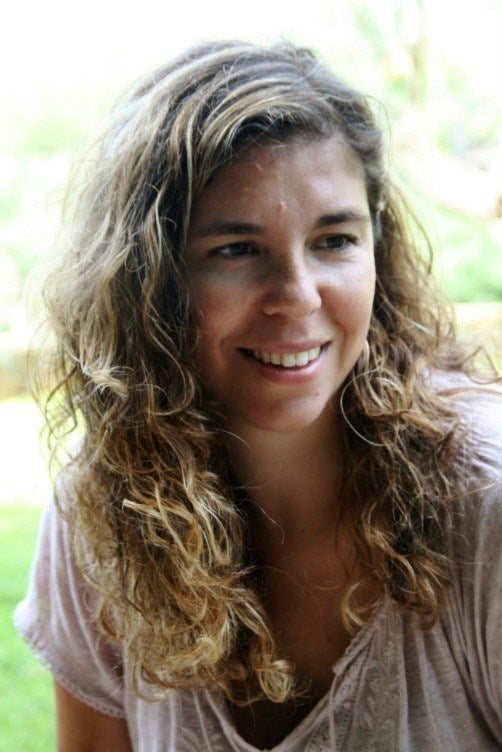
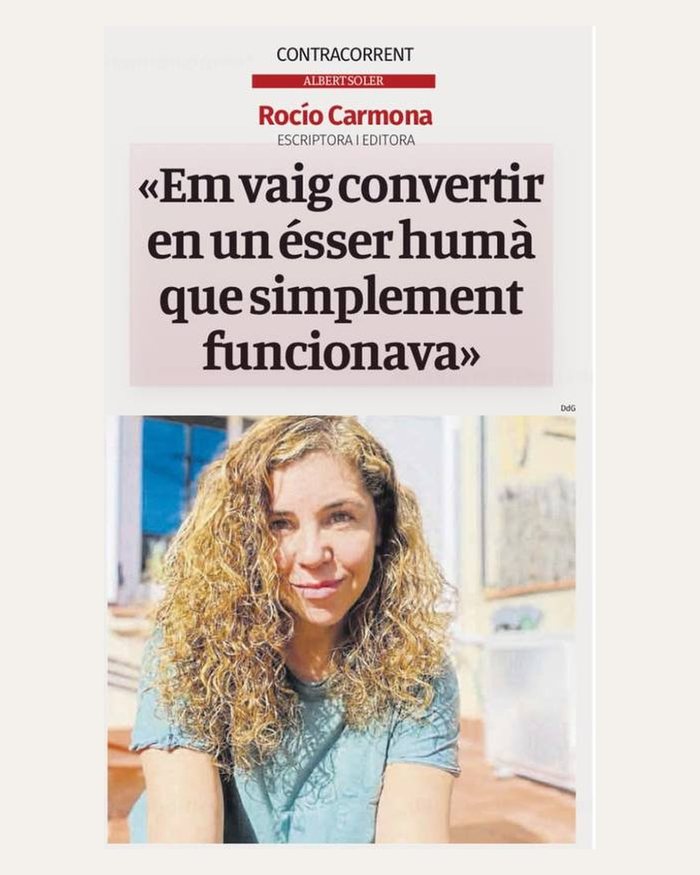
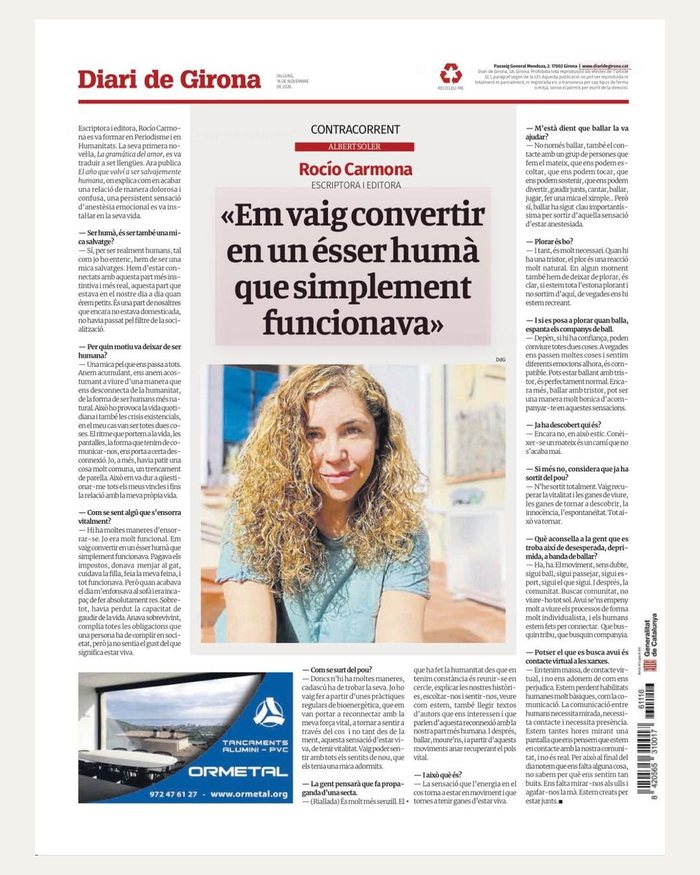
Diari de Girona
Interview by Albert Soler in “Contracorrent”
“I became a human being who simply functioned.”
Cuerpomente
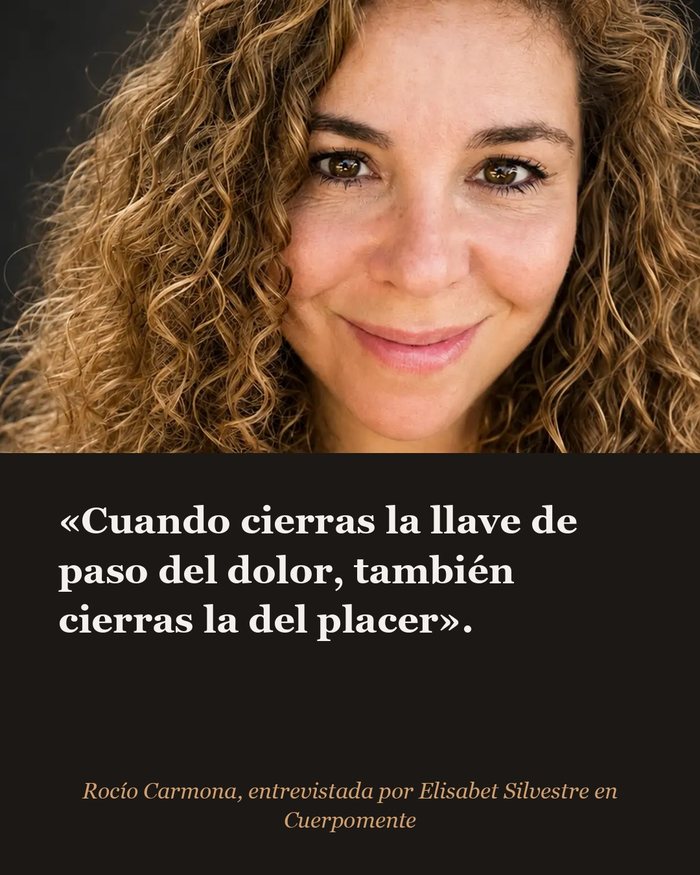
Interview by Elisabet Silvestre
“When you shut off the stopcock of pain, you shut off the one for pleasure too. You can’t choose to stop feeling only one kind of thing.”Read the interview →
YouTube
Premiere of the presentation and live session with Rocío
The whole presentation, premiered on the channel, with Rocío live in the chat.
Watch the premiere →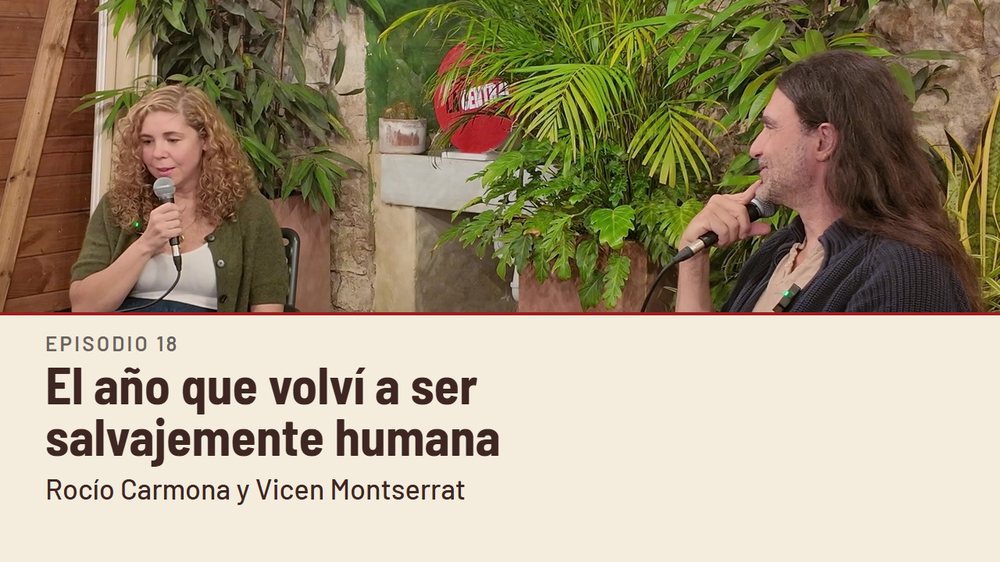
Revista Tú Mismo
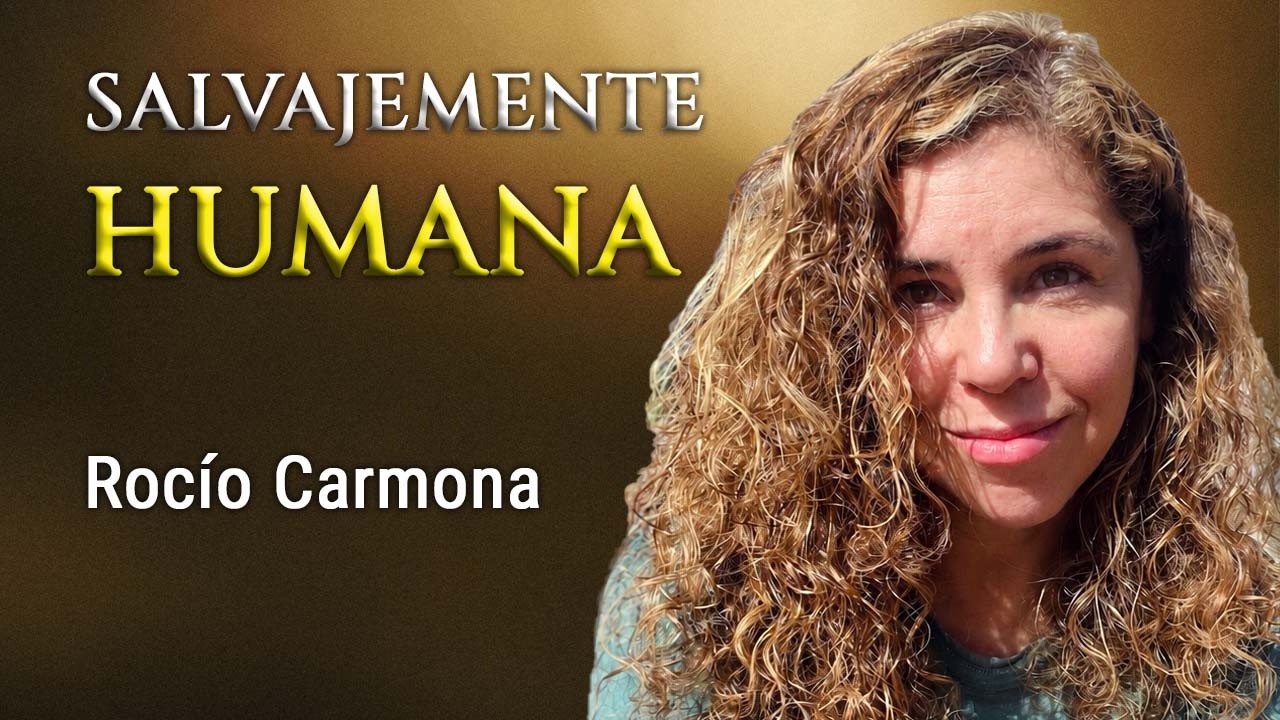
Video interview, 44 minutes, on its YouTube channel
How to come out of emotional anaesthesia and become one’s own home again.
Watch the interview →5 Nov · an excerpt on Instagram: “Is true transformation a strictly individual path, or not?” Watch the reel →
La Central del Raval
The book presentation, in Barcelona
Rocío, Vicen and the Kōan editors, in the bookshop’s garden. It’s the video above.
Watch the presentation ↑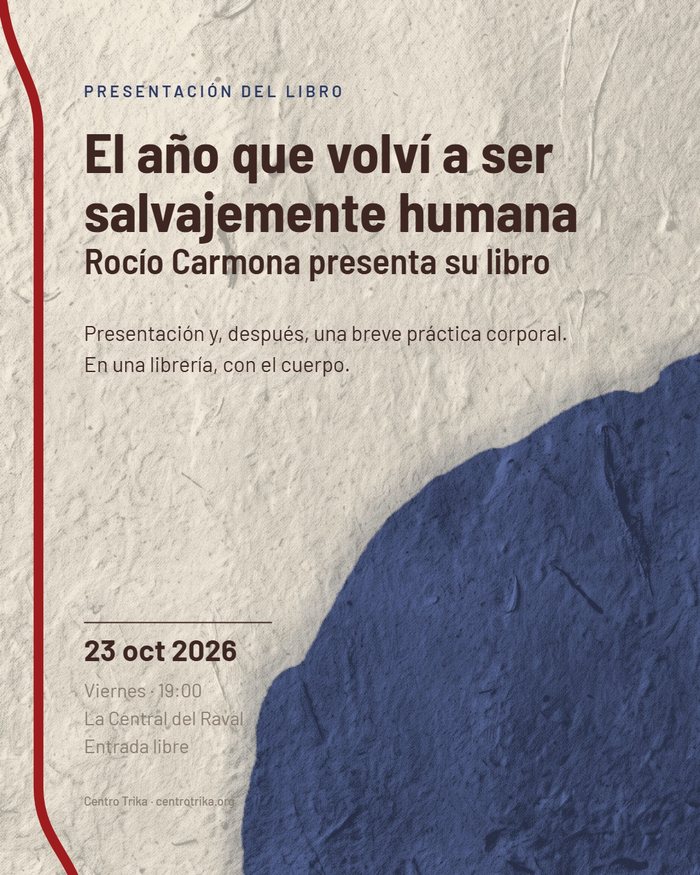
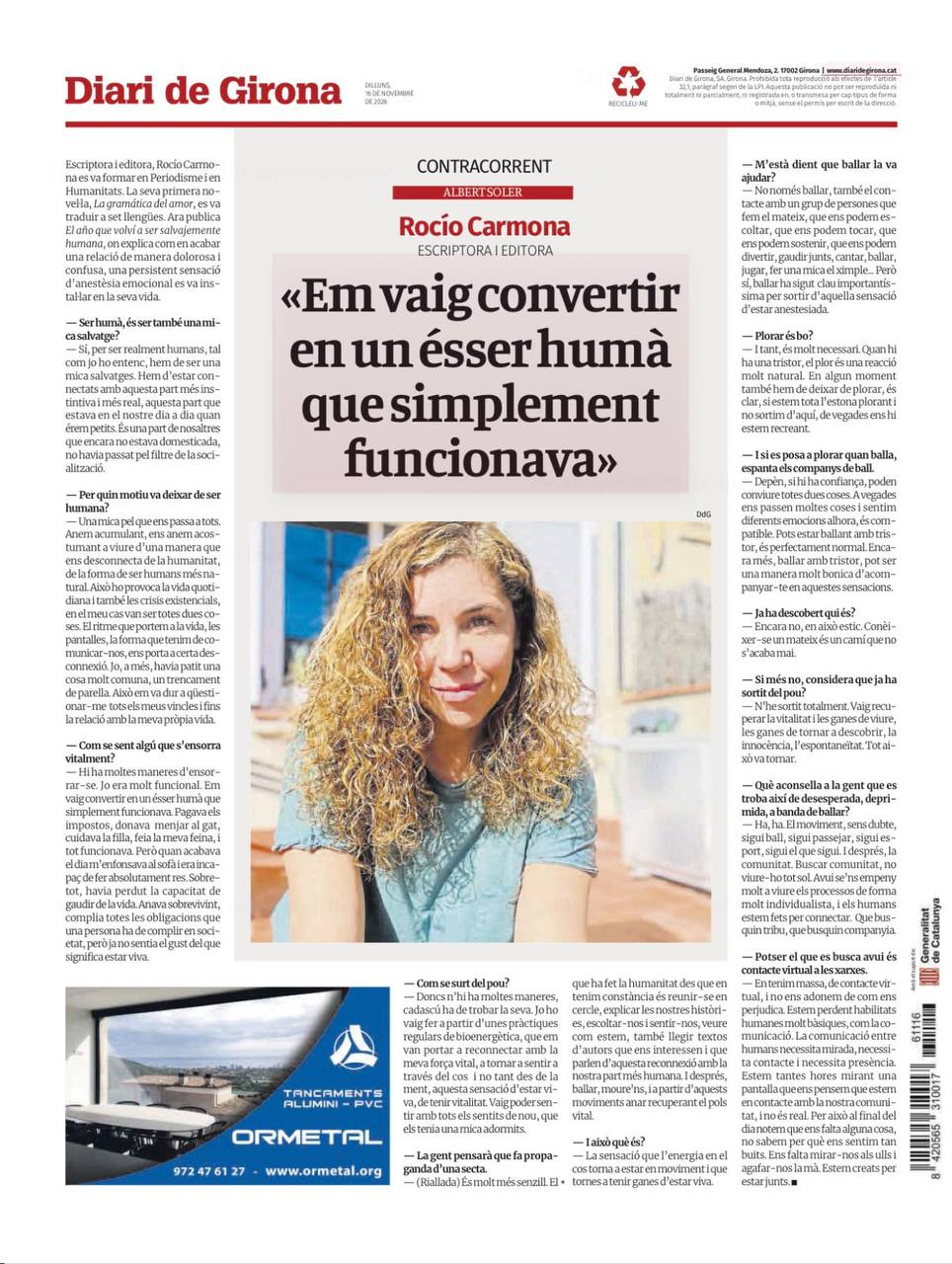
Qué Leer
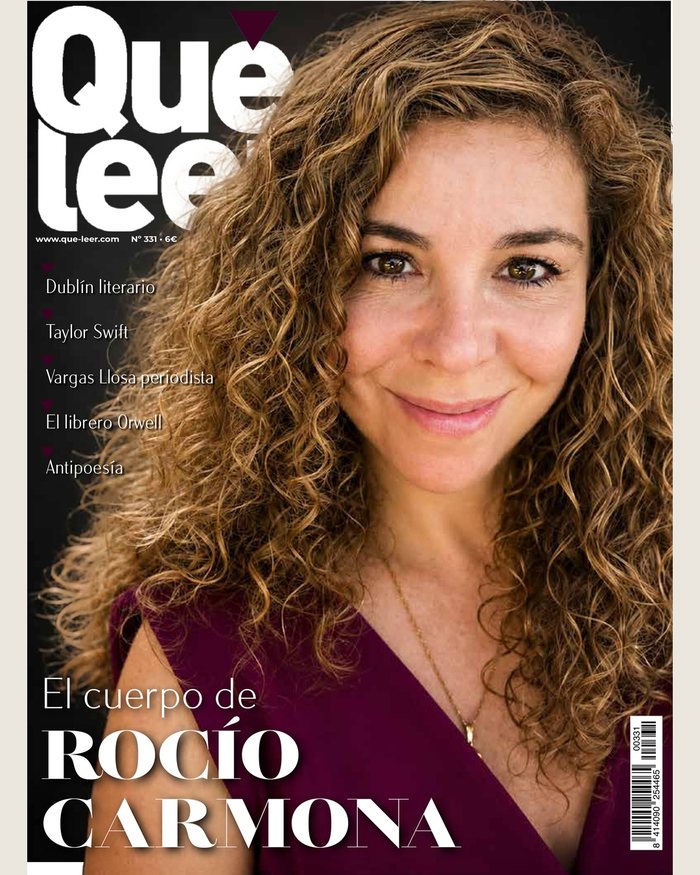
Cover and interview
“The body has a history too.”
Rocío tells how she came to her first session at Trika, rather sceptical and tired of looking for answers, and how she walked out into the street feeling the breeze on her skin, “as if someone had plugged me back into the current of life.”
What people are saying
“A beautiful exercise in sincerity in search of the personal essence: the delicate nakedness of the self that seeks to understand itself, all the way to the supreme discovery of knowing who you are; all the way to moving from spectator to protagonist of one’s own life.”
“Rocío has done the hardest thing: put into words —words that can be felt— what we thought could only be lived. Reading her makes you want to be wildly human again.”
Where the year happened
Trika
The year the book tells took place in Trika’s laboratory, in Barcelona: a group that meets every week to work with the whole organism, through bioenergetics and non-dual tantra. You don’t have to believe anything. Just come and see what happens.
This page is part of Salvajemente humanos, the doors through which one enters Trika.